 Luxury HotelsDirectoryBeach ResortsBoutiqueParisLondonNew YorkTokyoLuxury HotelsDirectoryBeach ResortsBoutiqueParisLondonNew YorkTokyo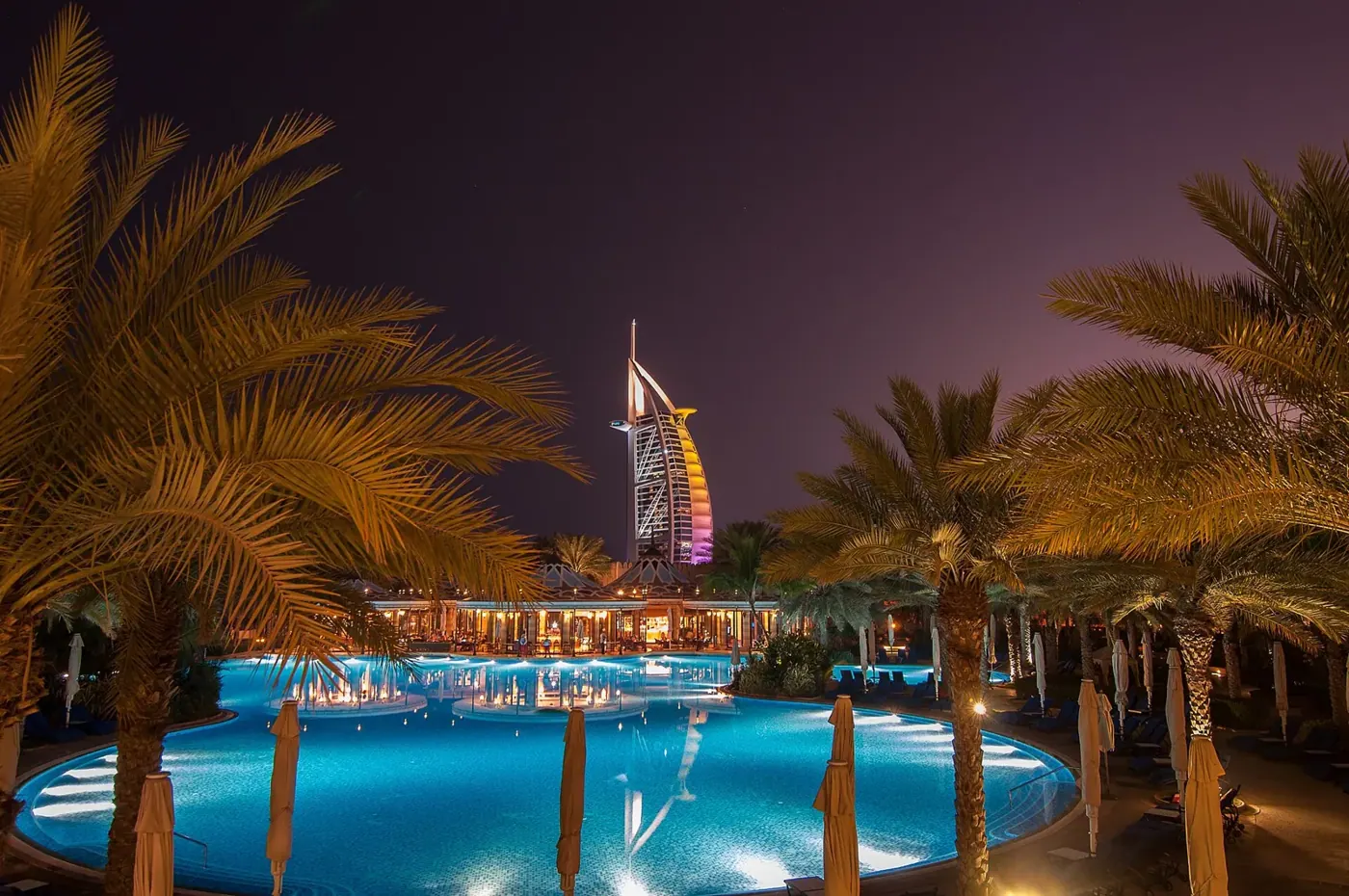
Burj al-Arab occupies an artificial island situated 280 metres offshore from Jumeirah Beach and is connected to the mainland by a private curving bridge. The property's distinctive sail-shaped structure reaches 321 metres in height and required three years of island construction followed by less than three years of building construction.
Check availability Official websiteThe hotel rests on an artificial island created through three years of land reclamation work. To establish a stable foundation on saturated seabed soil, builders drove 230 concrete piles, each 40 metres long, into the seabed using drilling methods. A ground surface layer of large rocks is circled with a concrete honeycomb pattern designed to protect the foundation from erosion and scour. The building's structural construction itself took less than three years following completion of the island foundation work.
The hotel building reaches a total height of 321 metres, though 39 percent of this height comprises non-occupiable space within the structure. The internal atrium extends 180 metres vertically. Construction required over 70,000 cubic metres of concrete and 9,000 tons of steel. The helipad is positioned near the roof at a height of 210 metres above ground level.
The artificial island connects to the mainland via a private curving bridge providing exclusive access to the hotel. The property is located in the Umm Suqeim area of Dubai. The beachfront location was previously known as Chicago Beach, named after the Chicago Bridge & Iron Company, which had conducted marine operations and oil storage construction on the site historically.
The building's silhouette is designed to resemble the sail of a traditional dhow vessel, reflecting Dubai's maritime heritage. The translucent fiberglass facade serves a dual function: shielding the interior from the intensity of desert sun during daytime while allowing illumination effects and interior light to be visible externally at night.
The hotel is on an artificial island 280 metres offshore in the Umm Suqeim area of Dubai, connected to the mainland by private curving bridge.
The island was created through three years of land reclamation. The foundation was secured using 230 concrete piles, each 40 metres long, driven into the seabed. A ground layer of large rocks with a concrete honeycomb pattern protects against erosion.
The building reaches 321 metres in height; 39 percent is non-occupiable space. The internal atrium is 180 metres tall. The helipad is located 210 metres above ground.
The sail-shaped silhouette is designed to resemble a traditional dhow sail, reflecting Dubai's seafaring heritage. The translucent fiberglass facade provides sun protection and allows night illumination.
The building contains over 70,000 cubic metres of concrete and 9,000 tons of steel.
Back to the Burj al-Arab overview for photos, map, address and verification, or see the full guide above.
Sources: jumeirah.com · en.wikipedia.org
No prices or ratings: rates change daily. We may earn a commission from partner links.